

Understanding the Howey Test: The 1946 Standard Defining Crypto Securities
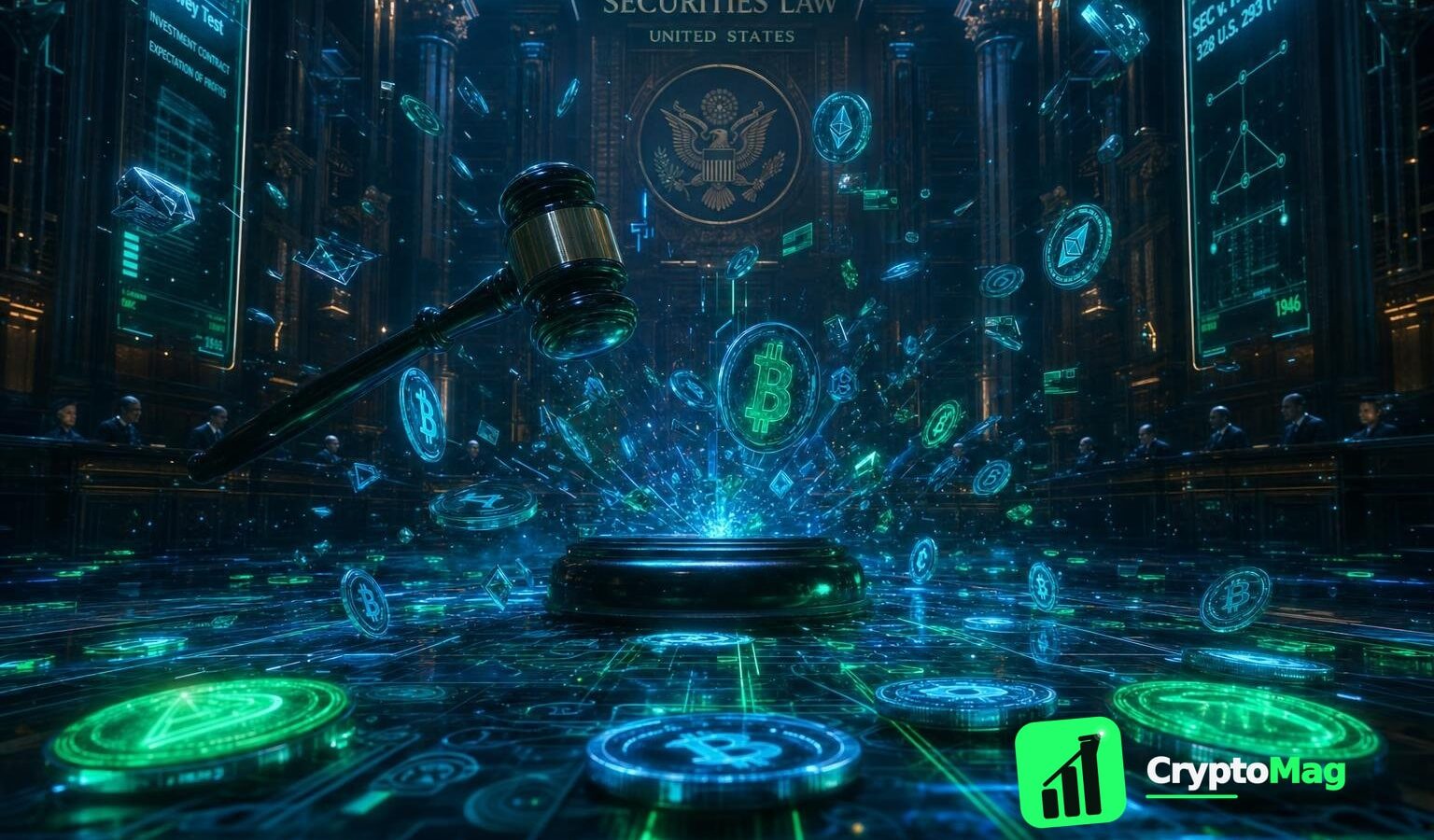
Understanding the Howey Test
The Howey Test is a critical legal standard established in 1946 that the United States courts and regulators utilize to determine whether a token constitutes a security. It emerged from a case involving the W. J. Howey Company, which sold parcels of orange groves in Florida and raised funds through service contracts promising buyers a share of profits. This ruling has profound implications for the crypto industry, influencing regulatory approaches and compliance efforts.
Origins of the Howey Test
In the 1940s, the W. J. Howey Company sold small pieces of its Florida citrus groves to many inexperienced buyers, offering them service contracts to cultivate the land and profit from the harvest. The Securities and Exchange Commission (SEC) intervened, stating these transactions were unregistered securities. The resulting Supreme Court case defined an investment contract as requiring an investment of money in a common enterprise with the expectation of profits primarily from the efforts of others.
The Four Prongs of the Test
The Howey Test includes four essential criteria, all of which must be satisfied to classify an investment as a security:
- Investment of Money: A wide interpretation of this prong includes cash, cryptocurrency, services, or other valuable assets given in exchange.
- Common Enterprise: This element requires that an investor’s fortunes are tied to those of the promoter or pooled with others, with various doctrines established to interpret this relationship.
- Expectation of Profits: The buyer must primarily expect financial returns rather than consumption or usage, making it crucial to distinguish investor motives.
- Efforts of Others: Returns must be predominantly dependent on the work of promoters or a company. If profits derive largely from market forces or personal initiative, they may not meet this criterion.
How the SEC Applies the Howey Test
In recent years, particularly during the initial coin offering (ICO) boom of 2017, many crypto projects raised funds through token sales resembling traditional securities. The SEC responded by asserting that most tokens, save for a few such as Bitcoin, appeared to meet the Howey criteria, leading to extensive regulatory actions. High-profile cases against companies like Telegram and Kik resulted in significant legal rulings confirming that sales of tokens with profit expectations relate back to investment contracts.
The Ripple Case and Its Implications
The ongoing litigation involving Ripple’s XRP token has brought vital distinctions to light. A federal judge determined that while direct sales of XRP constituted securities transactions, programmatic sales on exchanges to anonymous buyers did not, due to a lack of promises or relationships. This differentiation has sparked extensive debate about the nature of asset transactions.
Recent Developments and Future Considerations
On March 17, 2026, the SEC and the Commodity Futures Trading Commission (CFTC) jointly issued a formal interpretation of the Howey Test concerning crypto assets. This new guidance favors the industry’s perspective by focusing on the issuer’s representations and clarifying conditions under which a token could abandon its security status. However, considerable uncertainty remains, leaving the American crypto market to navigate complex compliance scenarios as legislation continues to evolve.
Source: crypto.news

ETH / ZAR
R44,550.08
+0.00% 24h
- 24h High
- R46,069.23
- 24h Low
- R34,133.72
7-day price
Powered By