

Visa Envisions Collaboration of Cards and Stablecoins in AI Economy
Visa Envisions Collaboration of Cards and Stablecoins in AI Economy
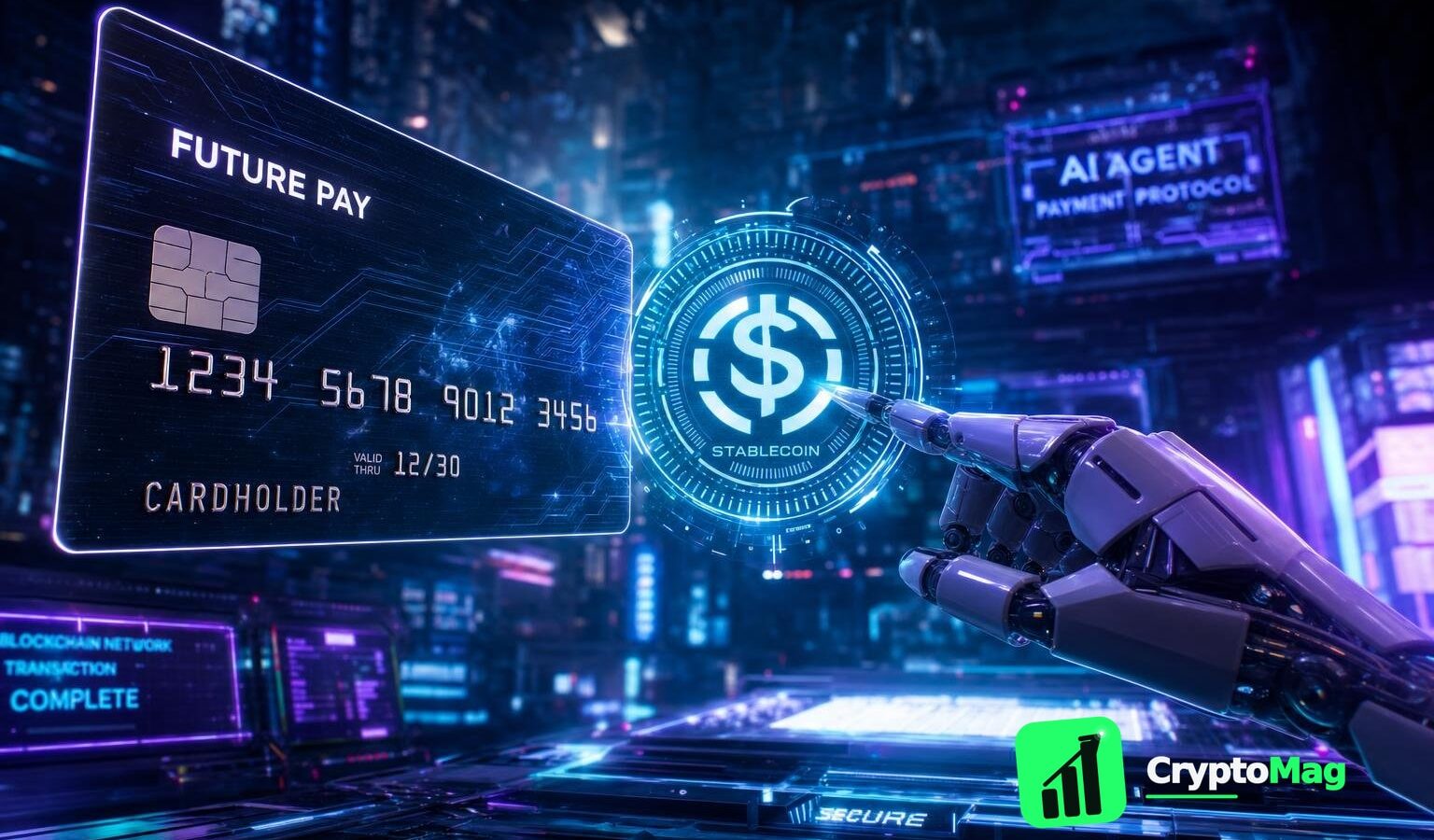
Visa has released insights on the potential synergy between traditional card networks and stablecoins in the forthcoming AI-driven economy. A collaborative report, produced with blockchain analytics firm Artemis, emphasizes that low-cost blockchain payments will be essential as artificial intelligence agents facilitate machine-to-machine transactions.
Distinct Payment Needs in Agentic Commerce
The report highlights that stablecoins are particularly suited for low-value transactions initiated by AI, while traditional cards will continue to serve consumers making larger purchases. This evolving landscape, termed ‘agentic commerce,’ necessitates a combination of both payment systems rather than viewing them as competitors.
According to the findings, Visa and Artemis classify payment needs into two categories: macro-commerce and micro-commerce. Macro-commerce refers to consumer transactions like travel bookings or subscription services, wherein AI agents operate on behalf of humans. Conversely, micro-commerce deals with frequent, small transactions between software services, such as API calls, where stablecoins are deemed more efficient.
Efficiency of Stablecoins for Micropayments
Visa states that traditional payment infrastructures are a poor fit for very small transactions due to their fixed costs, which can render such payments uneconomical. Blockchain technologies, however, have minimized settlement costs to mere fractions of a cent, positioning stablecoins as optimal for machine-native micropayments.
“In all likelihood, this won’t come down to a choice between cards and stablecoins. Both will have a place,” a Visa representative noted. Cards will still cater to established merchant networks, while stablecoins will facilitate numerous, low-value transactions.
Integration of Payment Systems
The report suggests that as agentic commerce matures, both payment methods may coalesce within individual workflows. For example, AI agents could leverage card networks for consumer-oriented purchases before transitioning to stablecoins for settling low-value transactions among software systems.
Legal and Trust Challenges
Despite the optimistic outlook on payment advancements, Visa cautions that significant obstacles remain, particularly regarding legal frameworks. Current laws primarily account for human transactions and do not adequately address issues like responsibility and dispute resolution in cases where AI agents operate autonomously.
This research builds on Visa’s ongoing initiatives around AI-enhanced commerce and stablecoins. Earlier this year, the company launched Visa Intelligent Commerce and partnered with OpenAI to ensure secure payment processes within agent-related experiences. Additionally, Visa has made strides in stablecoin settlement across its networks, with achievements including over $7 billion in annualized settlement run rates and 160 stablecoin-linked card programs under development.
In a recent move, Visa partnered with HashKey Exchange and Shanghai Commercial Bank to introduce a co-branded credit card in Hong Kong, enabling users to convert card rewards into cryptocurrency trading vouchers.
Source: crypto.news