

Tether Faces Compliance Challenges as USDT Countdown Begins
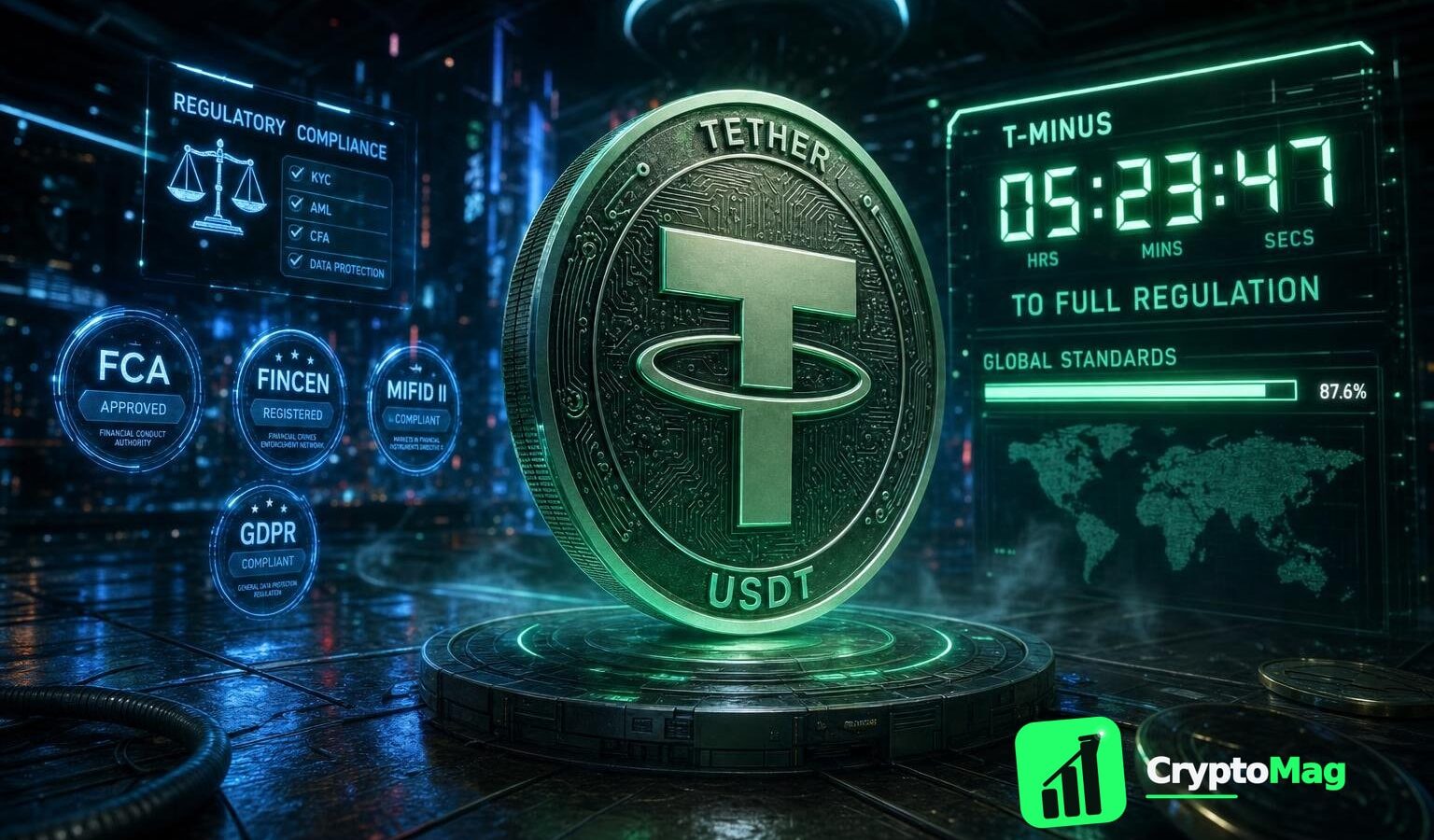
Tether Faces Compliance Challenges as USDT Countdown Begins
Tether, the issuer of the world’s leading stablecoin USDT, is under pressure as a significant regulatory deadline approaches. The GENIUS Act, which governs U.S. stablecoin issuers, marks its first anniversary, and companies like Tether have just two years to ensure compliance. By July 2028, stablecoins must meet new regulatory standards to continue circulating on U.S. crypto platforms.
GENIUS Act: A Regulatory Milestone
Originally signed into law a year ago by President Donald Trump, the GENIUS Act aims to create a framework for regulating stablecoins. However, despite its introduction, U.S. regulators have yet to finalize the implementing rules. This delay poses a dilemma for Tether and other non-U.S. issuers, as experts note that the lack of clarity complicates their compliance efforts.
The Compliance Hurdle for Tether
While Tether’s CEO Paolo Ardoino previously assured that the company would achieve compliance with the new laws, recent disclosures indicate that a substantial portion of USDT’s reserves – up to a quarter – are invested in assets that do not comply with GENIUS standards. These assets include precious metals and cryptocurrency holdings, whereas the Act emphasizes the necessity of maintaining reserves in cash and U.S. Treasury securities.
Market Dynamics and Competitor Responses
As the competition in the stablecoin market heats up, rivals like Circle, based in the U.S., have already made strides toward compliance, positioning themselves ahead of Tether. With Tether’s future in U.S. markets on a tightrope, industry experts are monitoring the ongoing developments closely.
Future Trajectories and Legal Interpretations
The GENIUS Act provides a grace period for compliance; however, it remains unclear whether foreign issuers like Tether are entitled to this period or if they must adhere to regulations as soon as the Act goes into effect. Some sources suggest that compliance is required as soon as the law is implemented, which is anticipated to be by January 2027.
Regulatory Uncertainty and the Path Forward
As the regulatory framework develops, many platforms are choosing to preemptively delist non-compliant stablecoins to mitigate risk. Companies that persist with non-compliant stablecoins may do so under the hope of clearer guidance or possible revisions to the law. Major players such as Coinbase have remained tight-lipped about their future listings under GENIUS, but the uncertainty shapes decisions across the industry.
Conclusion
The upcoming two years are critical for Tether’s USDT as companies strategize on how to adapt to the evolving regulatory landscape. Whether Tether can navigate these waters remains an open question as the countdown toward compliance continues.
Source: coindesk.com

USDT / ZAR
R18.25
0.00% 24h
- 24h High
- R18.25
- 24h Low
- R18.24
- Market Cap
- R3.34T
- Volume 24H
- R2.28T
7-day price
Powered By