Polymarket’s Dual Platforms: Understanding the Differences
Understanding Polymarket’s Dual Platforms
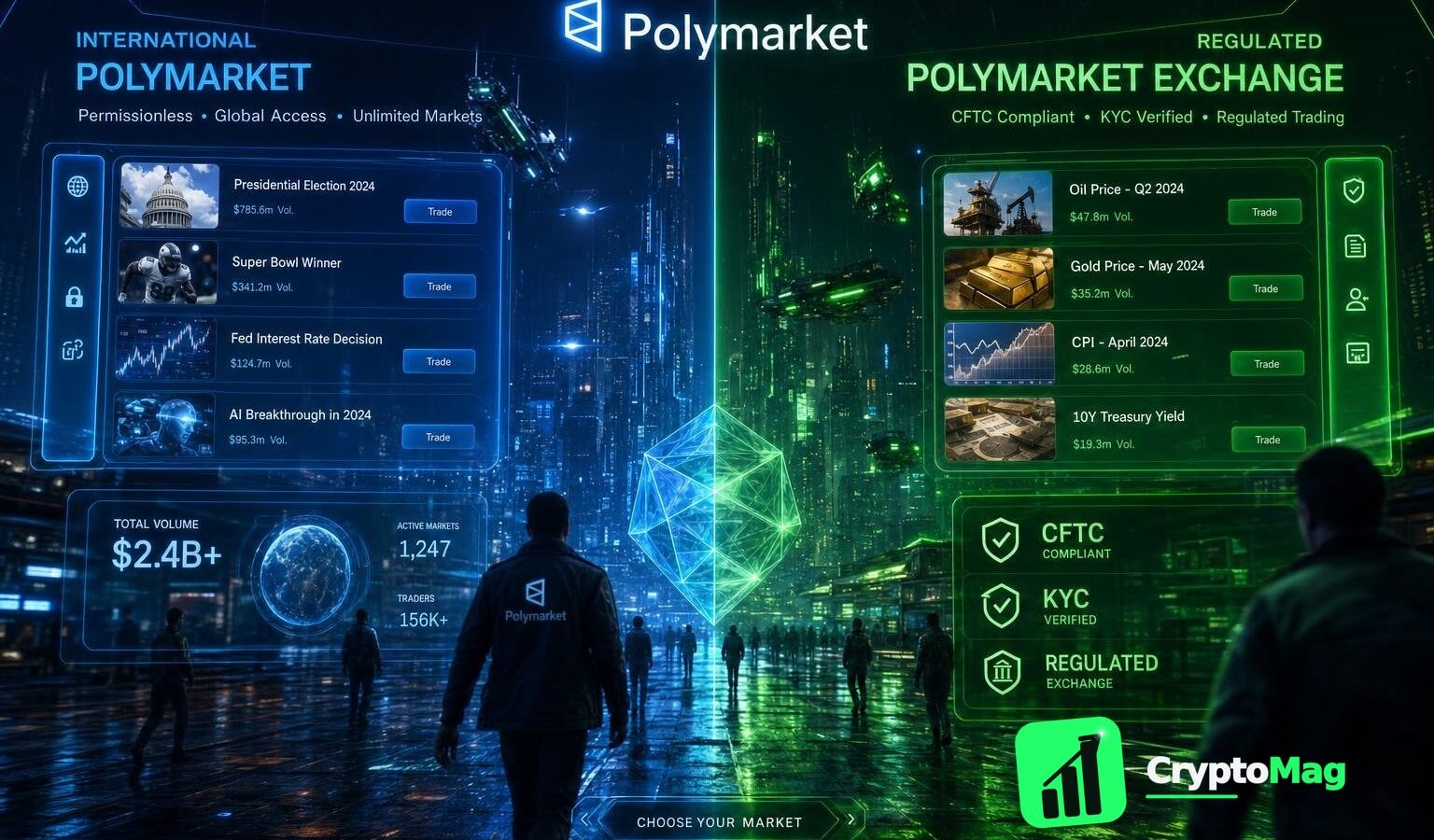
Polymarket operates two distinct platforms under the same brand, each catering to different regulatory environments and user experiences. One is an international DeFi platform that allows users to engage without identity verification, while the other is a federally regulated exchange in the US that requires thorough identity checks.
Two Distinct Venues
Polymarket features an international platform that settles markets in USDC on the Polygon blockchain, accessible through self-custodial wallets and free from traditional account requirements. This model enables users from various jurisdictions to participate without needing personal identification.
In contrast, Polymarket US operates as a CFTC-regulated designated contract market. Launched in December 2025, this US venue mandates users to provide government-issued identification, a Social Security number, proof of residency, and undergo a live selfie verification process.
Geographical Restrictions and Market Access
The international platform has been geoblocked from US addresses following a 2022 CFTC settlement that resulted in a $1.4 million penalty. It is also restricted in over twenty other countries. Users attempting to access this platform from a blocked jurisdiction risk account closure and loss of any recourse that the regulated US venue would typically provide.
Key Differences Between the Platforms
- Custody: On the international platform, users control their positions as tokens in their wallets, bearing self-custody risks. Conversely, the US exchange manages user funds in a regulated environment, providing corresponding customer protections but allowing the venue to impose account restrictions.
- Settlement Asset: Transactions on the international venue use stablecoins, while the US exchange involves dollar settlements processed through approved intermediaries.
- Identity Verification: The international platform does not require personal identification, only network address verification. In contrast, the US exchange requires comprehensive identity verification.
- Product Scope: The international platform can list sensitive markets, such as those related to armed conflicts, which are not permissible under CFTC regulations governing the US exchange.
The Evolution of Polymarket
The current structure of Polymarket is a result of historical compliance measures following the CFTC’s actions against the brand for operating an unregistered facility in 2022. Instead of applying for a license, the company acquired an existing CFTC-registered exchange, allowing it to create a compliant US entity while continuing its international operations.
Future Developments
Recent moves suggest the dual structure may evolve. In March, Polymarket released harmonized integrity rules across both venues. Additionally, in April, the company filed with the CFTC to allow US users access to the international platform.
The demand for diverse trading options is evident, with the international platform clearing over $10.8 billion in transactions driven by significant events, compared to the $3.5 billion on the US exchange. The large disparity indicates where liquidity and market activity predominantly reside.
As the regulatory landscape continues to change, both users and the marketplace will be keenly observing how Polymarket navigates these complexities, potentially redefining the boundaries of its two operational platforms.
Source: crypto.news