

Leonidas Launches DOG Mode to Challenge Bitcoin Governance
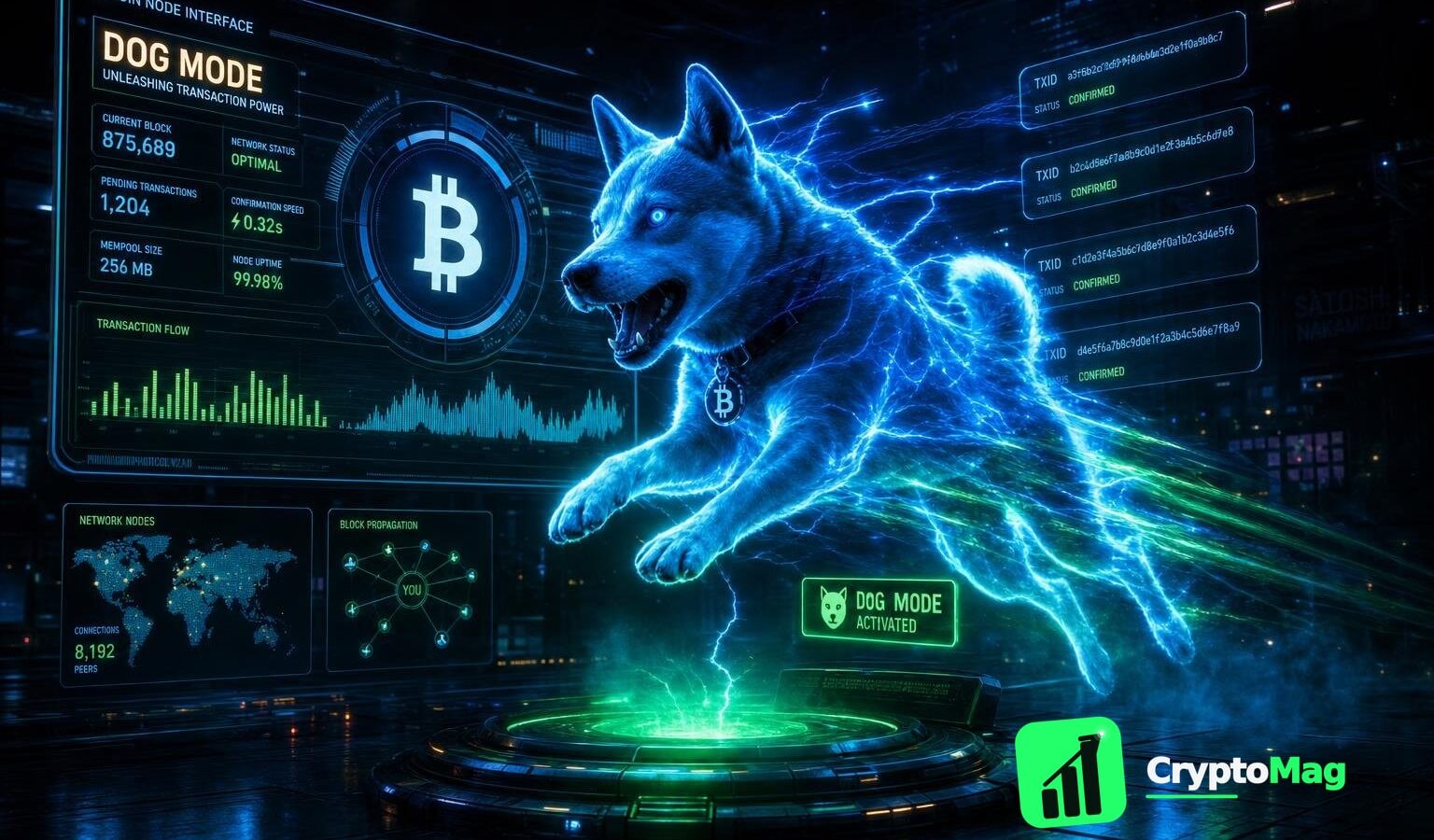
Introduction of DOG Mode in Bitcoin Governance
In a significant development in the ongoing debate around Bitcoin governance, Leonidas, an advocate for Bitcoin Ordinals, has introduced DOG Mode, a new open-source Bitcoin client. This innovative client aims to change the way Bitcoin nodes handle transaction relaying, all while maintaining Bitcoin’s existing consensus rules.
Features of DOG Mode
DOG Mode is designed to eliminate default relay limits, allowing fee-paying users greater access to block space without requiring prior approval from Bitcoin Core regarding transaction purposes. This approach directly contrasts with the proposed BIP 110, which seeks to implement temporary consensus restrictions on certain data-heavy transaction types.
Technical Enhancements
One of the key changes DOG Mode introduces is increasing the maximum individual transaction size allowed for relay to 3.9 million weight units, compared to the current limit of 400,000 weight units set by Bitcoin Core. Additionally, it lowers the dust threshold for smaller transaction outputs to a mere one satoshi.
Market-Based Competition for Block Space
Leonidas has emphasized the need for a market-based model where all valid, fee-paying transactions are treated equally. He believes that users should compete for block space through fees, rather than developers dictating which transaction types receive relay support. The implementation of DOG Mode could facilitate the propagation of larger Ordinals inscriptions and small outputs associated with various Bitcoin-native token protocols.
Implications for Bitcoin Governance
The introduction of DOG Mode raised pertinent questions regarding the decentralization of Bitcoin governance. While the Bitcoin Core developers maintain the authority to set default relay policies, node operators have the freedom to run alternative software. This flexibility enables miners to receive transactions via direct channels outside the public peer-to-peer network.
A Distinct Approach from BIP 110
DOG Mode’s philosophy diverges sharply from that of BIP 110, which has garnered mixed reactions among Bitcoin users. While supporters argue the necessity of restricting data-heavy transactions to optimize storage costs and prevent congestion, critics view these restrictions as a form of censorship. Notable figures like Michael Saylor and Adam Back have expressed opposition to BIP 110.
The Future of Bitcoin’s Transaction Policies
The future influence of DOG Mode will depend significantly on its adoption by node operators and miners. Leonidas hopes that increased usage will prompt existing Bitcoin clients to revisit and potentially lift what he deems unnecessary restrictions. Ultimately, the ongoing dispute highlights differing philosophies on how Bitcoin should manage its transaction policies moving forward.
Source: crypto.news

BTC / ZAR
R1,408,627.71
-0.44% 24h
- 24h High
- R1,437,479.50
- 24h Low
- R1,393,588.25
- Market Cap
- R28.27T
- Volume 24H
- R1.14T
7-day price
Powered By