

Understanding Intents and Solvers in DeFi Trading
Understanding Intents and Solvers in DeFi Trading
In the evolving landscape of decentralized finance (DeFi), the mechanisms through which users execute trades are becoming increasingly sophisticated. A pivotal innovation in this space is the concept of intents and solvers, which streamline trading while mitigating risks associated with miner extractable value (MEV).
The Role of Intents
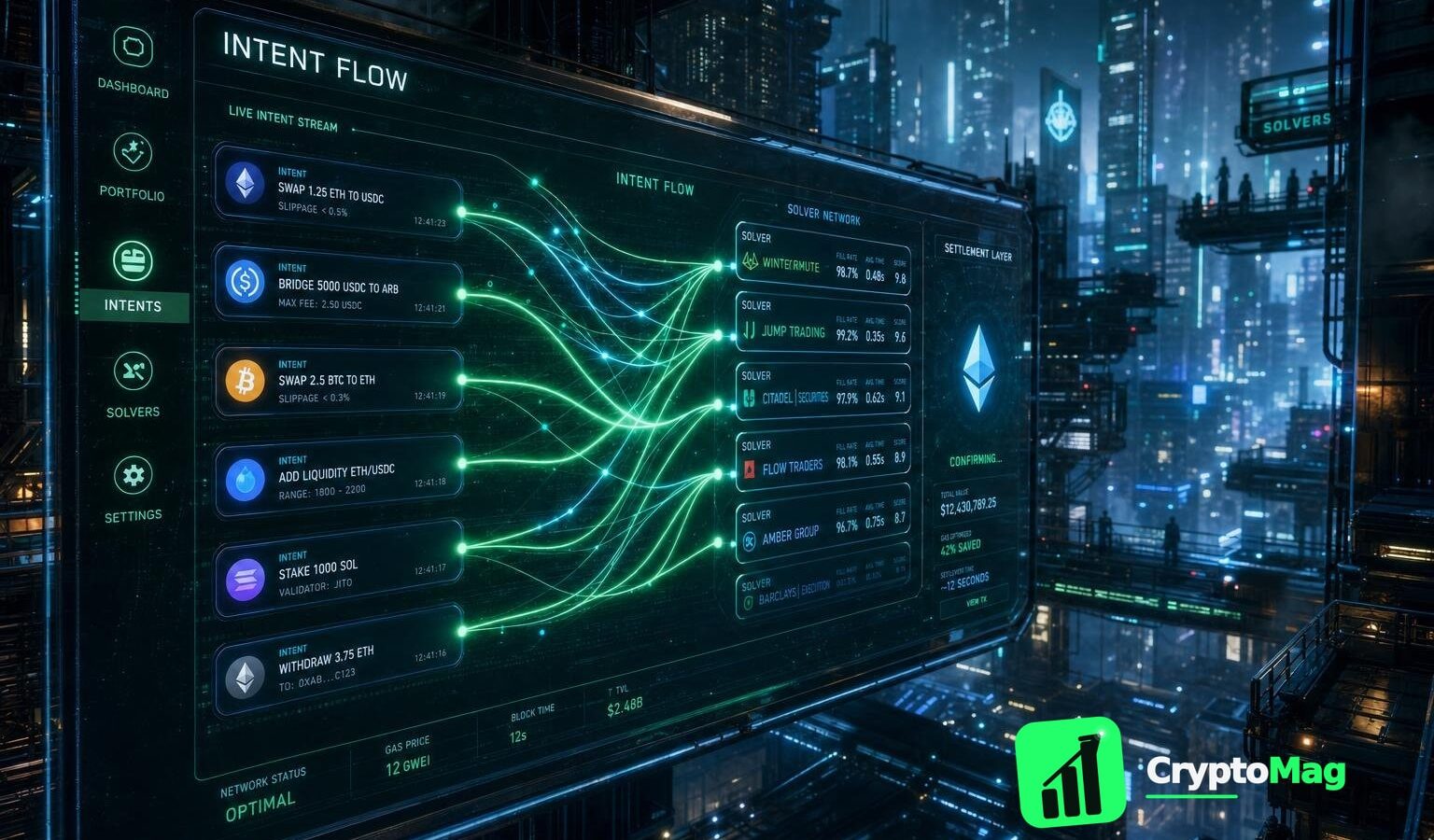
An intent is a signed message that articulates a user’s desired trading outcome – for instance, exchanging 1 ETH for at least 3,200 USDC – without detailing the specific path of execution. This approach disconnects the user’s objective from the actual execution process, allowing for a more flexible and competitive environment.
How Solvers Operate
Solvers are entities that engage in competitive bidding to fulfill the intents submitted by users. They examine various options across decentralized exchanges (DEXs), centralized exchanges (CEXs), and cross-chain liquidity sources to identify the most advantageous price for the user. Solvers bear the responsibility for executing the trade at the promised conditions, utilizing sophisticated routing algorithms and capital management strategies.
Advantages of Intent-Based Protocols
Intent-based protocols bring several benefits:
- Protection from MEV Attacks: By keeping the intents off the public mempool, these protocols shield users from exploitation by MEV bots that thrive on detecting transactions.
- Optimal Price Discovery: Rather than being limited to a single execution route, intents allow solvers to explore multiple avenues for achieving the best price.
- Reduced Gas Costs: By aggregating multiple orders into batch transactions, users share gas costs, leading to cost efficiencies.
Implementation in Leading Protocols
Several prominent protocols have adopted the intent-solver model:
- CoW Protocol: This protocol utilizes a batch auction system where intents are collected and solved collectively. This mechanism allows for peer-to-peer matching, reducing reliance on traditional AMM fees.
- UniswapX: Launched in 2023, UniswapX layers an intent-based execution framework over existing liquidity pools, facilitating Dutch order auctions that incentivize quick execution.
- Across Protocol: Focused on cross-chain asset transfers, this protocol enables users to relay their intents across different blockchains rapidly, significantly improving transaction times.
The Need for Standardization
A critical challenge with the current intent-based systems is the lack of a universal standard, leading to fragmentation. The proposed ERC-7683 initiative aims to establish a common framework for cross-chain intents, enhancing competition and liquidity across different protocols.
Conclusion
The introduction of intents and solvers represents a significant shift in how users can engage with DeFi protocols, potentially leading to better trading outcomes and a more equitable environment. As these systems mature, their adoption may redefine user experiences in decentralized trading.
Source: crypto.news