Understanding Zero-Knowledge Proofs: Enhancing Blockchain Privacy and Scalability
Understanding Zero-Knowledge Proofs: Enhancing Blockchain Privacy and Scalability
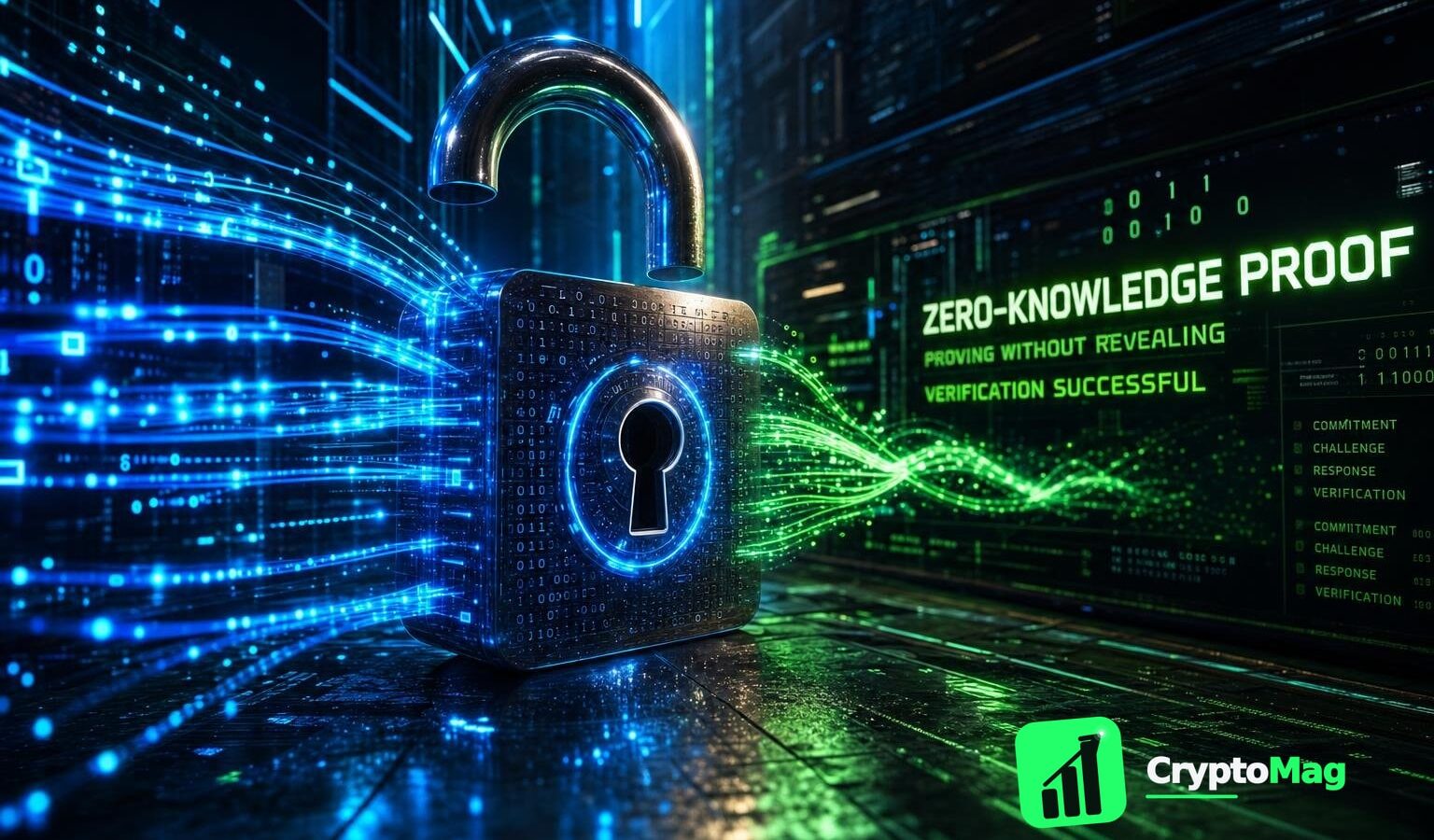
Zero-knowledge proofs (ZKPs) are cryptographic methods that allow one party (the prover) to demonstrate the truth of a statement to another party (the verifier) without revealing any additional information. This technique is pivotal in ensuring privacy and scalability within blockchain systems and various identity verification frameworks.
The Mechanics of Zero-Knowledge Proofs
At its core, a zero-knowledge proof enables a prover to convince a verifier that a computation has been accurately performed without disclosing the underlying data. There are two primary families of zero-knowledge proofs utilized in blockchain: zk-SNARKs, which necessitate an initial trusted setup, and zk-STARKs, which forgo this step but produce larger proofs.
Ethereum layer 2 rollups, such as zkSync, Scroll, and Polygon zkEVM, leverage ZKPs to consolidate numerous transactions into a single proof that can be validated on the main Ethereum chain, leading to reductions in gas costs by over 90%.
The GKR Protocol and Its Impact
In late 2025, Vitalik Buterin introduced the GKR protocol designed to expedite the verification of zero-knowledge proofs in Ethereum. This innovation aims to make the application of ZKPs practical for broader, everyday use at scale.
Types of Zero-Knowledge Proofs
Zero-knowledge proofs must satisfy three essential properties:
- Completeness: If the statement is true and both parties adhere to the protocol, the verifier will always validate the proof.
- Soundness: If the statement is false, no dishonest prover can convince the verifier of its truth with a significant probability.
- Zero-knowledge: The verifier learns nothing beyond the affirmation of the statement’s truth.
This leads to the paradox of how a computation can be validated without revealing sensitive information. ZKPs encode computations as polynomial equations, which verifiers can assess without ever directly observing the initial values.
zk-SNARKs: Pros and Cons
zk-SNARK, which stands for Zero-Knowledge Succinct Non-interactive Argument of Knowledge, is known for its compact proof sizes, typically only a few hundred bytes, which can be verified within milliseconds regardless of computational complexity. However, the trusted setup, involving a one-time ceremony to generate the necessary cryptographic strings, poses risks if not managed correctly, often referred to as “toxic waste.” Modern alternatives like PLONK offer an updatable trusted setup, allowing reuse across circuits and improving security without restarting from scratch.
zk-STARKs: A Transparent Alternative
zk-STARK stands for Zero-Knowledge Scalable Transparent Argument of Knowledge. They require no trusted setup, utilizing publicly verifiable randomness to eliminate toxic waste issues. While STARKs produce larger proofs, ranging from tens to hundreds of kilobytes, they are scalable and resilient against quantum computing threats, making them appealing for applications demanding long-term security.
Real-World Applications and Challenges
The most prominent application of zero-knowledge proofs involves ZK rollups, which consolidate transactions off-chain and generate proofs to validate batches, significantly reducing costs compared to on-chain execution. As of mid-2026, major ZK rollup projects include zkSync Era, Scroll, and Polygon zkEVM, each adopting various proving systems and tradeoffs.
Despite their transformative potential in enhancing privacy, ZKPs also open discussions about regulatory concerns, particularly regarding fully private transactions potentially facilitating illicit activities. The balance between individual privacy rights and regulatory transparency remains a critical issue in the evolving cryptocurrency landscape.
Limitations of Zero-Knowledge Proofs
While ZKPs ensure computational integrity, they do not verify the correctness of the inputs or the larger system’s integrity. For instance, while a ZK rollup can confirm valid transactions as per the system’s rules, it cannot ensure that those rules are free from errors, underscoring the need for continued vigilance during audits and implementations.
Source: crypto.news

ETH / ZAR
R44,312.46
-0.53% 24h
- 24h High
- R46,389.49
- 24h Low
- R43,111.79
- Market Cap
- R5.34T
- Volume 24H
- R554.52B
7-day price
Powered By